Post-Quantum Cryptography Migration Guide for Software Teams (2026)
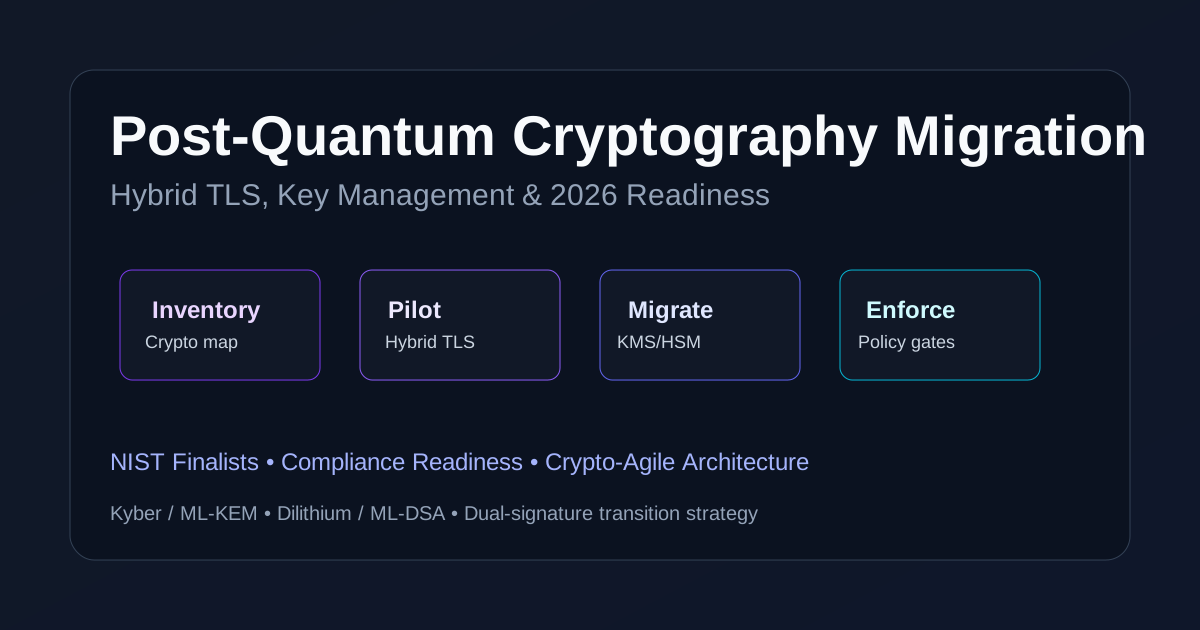
Comprehensive post-quantum migration playbook for engineering teams: inventory, hybrid TLS, certificate lifecycle, governance controls, and phased implementation across enterprise systems.
TL;DR
"Production-grade adoption requires strict policy controls, staged rollout, observability-first operations, and measurable governance across architecture, security, and platform engineering."
Table of Contents
1. Risk Model and Threat Horizon
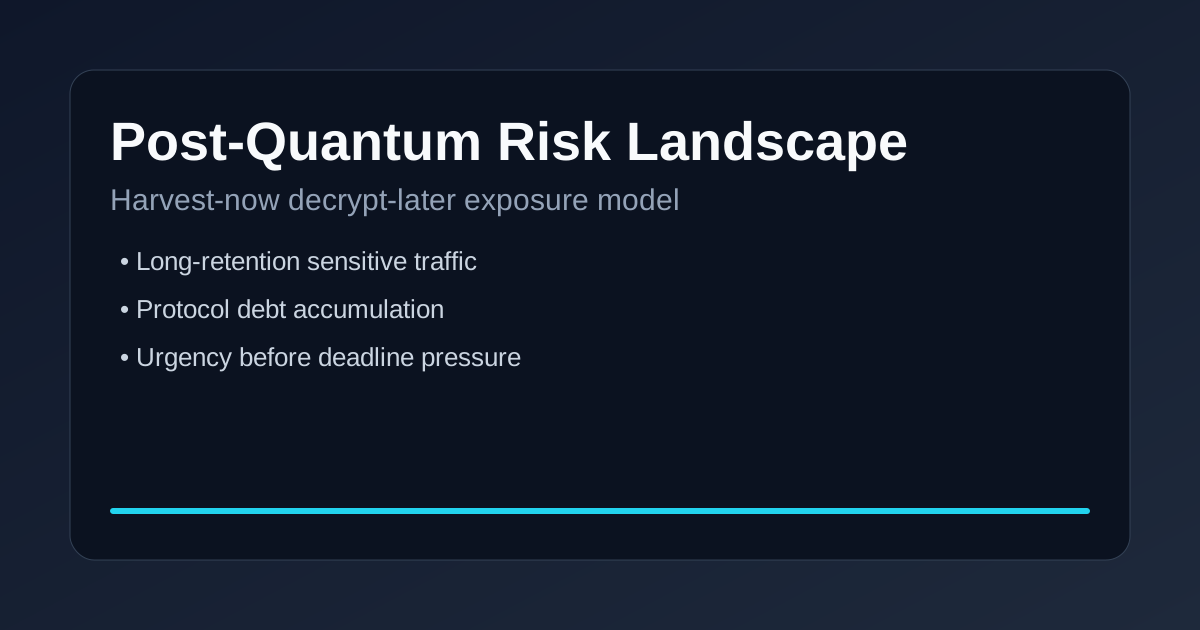
In Post-Quantum Cryptography programs, risk model and threat horizon is not treated as an isolated technical task; it is an operational discipline that combines architecture decisions, release governance, and measurable reliability outcomes. Teams that scale successfully define explicit ownership boundaries, testable contracts, and rollback-first delivery plans before expanding adoption to critical workloads. Rather than relying on ad-hoc intuition, they instrument end-to-end visibility, compare behavior across environments, and use evidence from latency, failure, and policy metrics to guide rollout sequencing. This approach keeps delivery velocity high while preventing security and availability regressions that often appear when complex transitions are rushed.
In Post-Quantum Cryptography programs, risk model and threat horizon is not treated as an isolated technical task; it is an operational discipline that combines architecture decisions, release governance, and measurable reliability outcomes. Teams that scale successfully define explicit ownership boundaries, testable contracts, and rollback-first delivery plans before expanding adoption to critical workloads. Rather than relying on ad-hoc intuition, they instrument end-to-end visibility, compare behavior across environments, and use evidence from latency, failure, and policy metrics to guide rollout sequencing. This approach keeps delivery velocity high while preventing security and availability regressions that often appear when complex transitions are rushed.
In Post-Quantum Cryptography programs, risk model and threat horizon is not treated as an isolated technical task; it is an operational discipline that combines architecture decisions, release governance, and measurable reliability outcomes. Teams that scale successfully define explicit ownership boundaries, testable contracts, and rollback-first delivery plans before expanding adoption to critical workloads. Rather than relying on ad-hoc intuition, they instrument end-to-end visibility, compare behavior across environments, and use evidence from latency, failure, and policy metrics to guide rollout sequencing. This approach keeps delivery velocity high while preventing security and availability regressions that often appear when complex transitions are rushed.
2. Continuous Cryptographic Inventory
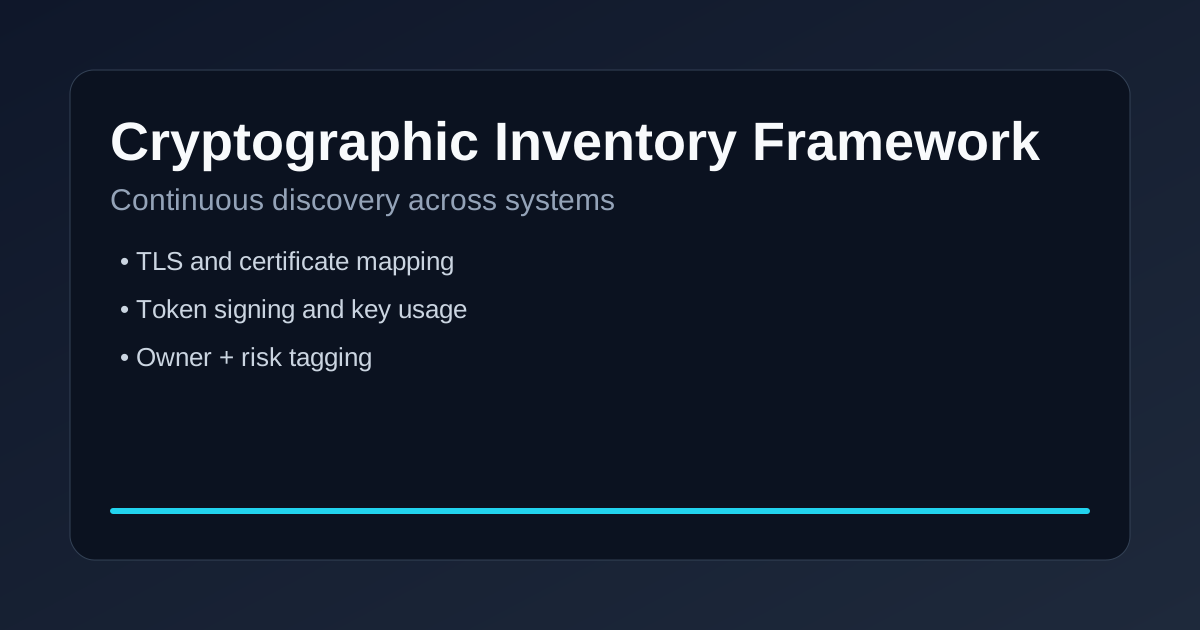
In Post-Quantum Cryptography programs, continuous cryptographic inventory is not treated as an isolated technical task; it is an operational discipline that combines architecture decisions, release governance, and measurable reliability outcomes. Teams that scale successfully define explicit ownership boundaries, testable contracts, and rollback-first delivery plans before expanding adoption to critical workloads. Rather than relying on ad-hoc intuition, they instrument end-to-end visibility, compare behavior across environments, and use evidence from latency, failure, and policy metrics to guide rollout sequencing. This approach keeps delivery velocity high while preventing security and availability regressions that often appear when complex transitions are rushed.
In Post-Quantum Cryptography programs, continuous cryptographic inventory is not treated as an isolated technical task; it is an operational discipline that combines architecture decisions, release governance, and measurable reliability outcomes. Teams that scale successfully define explicit ownership boundaries, testable contracts, and rollback-first delivery plans before expanding adoption to critical workloads. Rather than relying on ad-hoc intuition, they instrument end-to-end visibility, compare behavior across environments, and use evidence from latency, failure, and policy metrics to guide rollout sequencing. This approach keeps delivery velocity high while preventing security and availability regressions that often appear when complex transitions are rushed.
In Post-Quantum Cryptography programs, continuous cryptographic inventory is not treated as an isolated technical task; it is an operational discipline that combines architecture decisions, release governance, and measurable reliability outcomes. Teams that scale successfully define explicit ownership boundaries, testable contracts, and rollback-first delivery plans before expanding adoption to critical workloads. Rather than relying on ad-hoc intuition, they instrument end-to-end visibility, compare behavior across environments, and use evidence from latency, failure, and policy metrics to guide rollout sequencing. This approach keeps delivery velocity high while preventing security and availability regressions that often appear when complex transitions are rushed.
3. Data Classification and Priority Waves
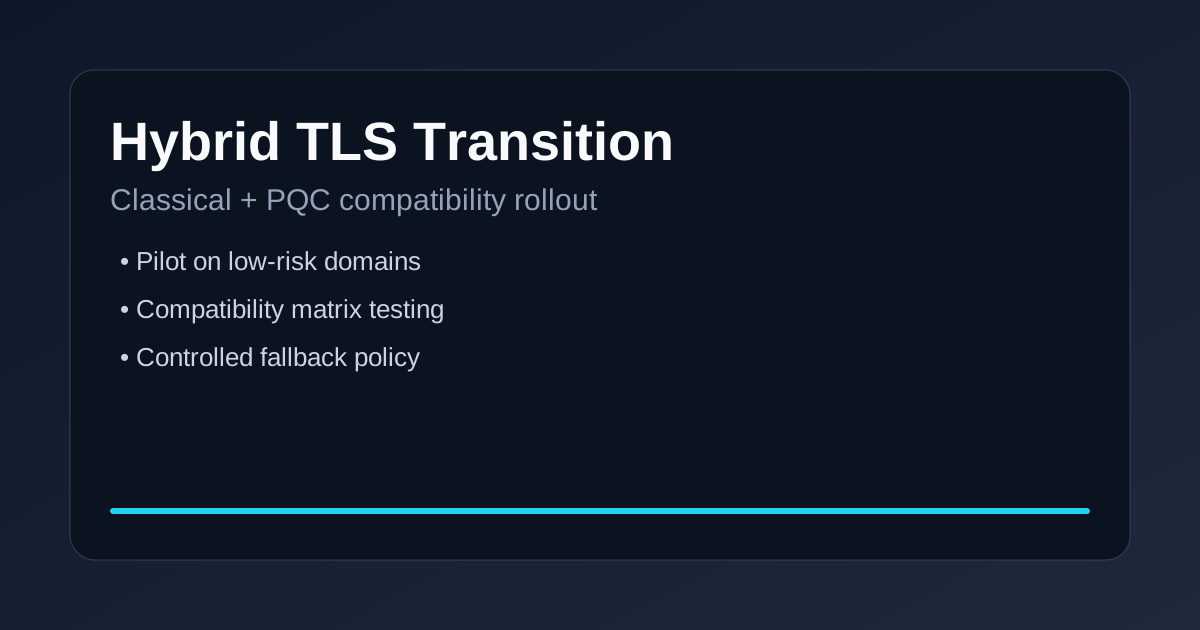
In Post-Quantum Cryptography programs, data classification and priority waves is not treated as an isolated technical task; it is an operational discipline that combines architecture decisions, release governance, and measurable reliability outcomes. Teams that scale successfully define explicit ownership boundaries, testable contracts, and rollback-first delivery plans before expanding adoption to critical workloads. Rather than relying on ad-hoc intuition, they instrument end-to-end visibility, compare behavior across environments, and use evidence from latency, failure, and policy metrics to guide rollout sequencing. This approach keeps delivery velocity high while preventing security and availability regressions that often appear when complex transitions are rushed.
In Post-Quantum Cryptography programs, data classification and priority waves is not treated as an isolated technical task; it is an operational discipline that combines architecture decisions, release governance, and measurable reliability outcomes. Teams that scale successfully define explicit ownership boundaries, testable contracts, and rollback-first delivery plans before expanding adoption to critical workloads. Rather than relying on ad-hoc intuition, they instrument end-to-end visibility, compare behavior across environments, and use evidence from latency, failure, and policy metrics to guide rollout sequencing. This approach keeps delivery velocity high while preventing security and availability regressions that often appear when complex transitions are rushed.
In Post-Quantum Cryptography programs, data classification and priority waves is not treated as an isolated technical task; it is an operational discipline that combines architecture decisions, release governance, and measurable reliability outcomes. Teams that scale successfully define explicit ownership boundaries, testable contracts, and rollback-first delivery plans before expanding adoption to critical workloads. Rather than relying on ad-hoc intuition, they instrument end-to-end visibility, compare behavior across environments, and use evidence from latency, failure, and policy metrics to guide rollout sequencing. This approach keeps delivery velocity high while preventing security and availability regressions that often appear when complex transitions are rushed.
4. Hybrid TLS Design Principles
In Post-Quantum Cryptography programs, hybrid tls design principles is not treated as an isolated technical task; it is an operational discipline that combines architecture decisions, release governance, and measurable reliability outcomes. Teams that scale successfully define explicit ownership boundaries, testable contracts, and rollback-first delivery plans before expanding adoption to critical workloads. Rather than relying on ad-hoc intuition, they instrument end-to-end visibility, compare behavior across environments, and use evidence from latency, failure, and policy metrics to guide rollout sequencing. This approach keeps delivery velocity high while preventing security and availability regressions that often appear when complex transitions are rushed.
In Post-Quantum Cryptography programs, hybrid tls design principles is not treated as an isolated technical task; it is an operational discipline that combines architecture decisions, release governance, and measurable reliability outcomes. Teams that scale successfully define explicit ownership boundaries, testable contracts, and rollback-first delivery plans before expanding adoption to critical workloads. Rather than relying on ad-hoc intuition, they instrument end-to-end visibility, compare behavior across environments, and use evidence from latency, failure, and policy metrics to guide rollout sequencing. This approach keeps delivery velocity high while preventing security and availability regressions that often appear when complex transitions are rushed.
In Post-Quantum Cryptography programs, hybrid tls design principles is not treated as an isolated technical task; it is an operational discipline that combines architecture decisions, release governance, and measurable reliability outcomes. Teams that scale successfully define explicit ownership boundaries, testable contracts, and rollback-first delivery plans before expanding adoption to critical workloads. Rather than relying on ad-hoc intuition, they instrument end-to-end visibility, compare behavior across environments, and use evidence from latency, failure, and policy metrics to guide rollout sequencing. This approach keeps delivery velocity high while preventing security and availability regressions that often appear when complex transitions are rushed.
5. Compatibility Matrix Engineering
In Post-Quantum Cryptography programs, compatibility matrix engineering is not treated as an isolated technical task; it is an operational discipline that combines architecture decisions, release governance, and measurable reliability outcomes. Teams that scale successfully define explicit ownership boundaries, testable contracts, and rollback-first delivery plans before expanding adoption to critical workloads. Rather than relying on ad-hoc intuition, they instrument end-to-end visibility, compare behavior across environments, and use evidence from latency, failure, and policy metrics to guide rollout sequencing. This approach keeps delivery velocity high while preventing security and availability regressions that often appear when complex transitions are rushed.
In Post-Quantum Cryptography programs, compatibility matrix engineering is not treated as an isolated technical task; it is an operational discipline that combines architecture decisions, release governance, and measurable reliability outcomes. Teams that scale successfully define explicit ownership boundaries, testable contracts, and rollback-first delivery plans before expanding adoption to critical workloads. Rather than relying on ad-hoc intuition, they instrument end-to-end visibility, compare behavior across environments, and use evidence from latency, failure, and policy metrics to guide rollout sequencing. This approach keeps delivery velocity high while preventing security and availability regressions that often appear when complex transitions are rushed.
In Post-Quantum Cryptography programs, compatibility matrix engineering is not treated as an isolated technical task; it is an operational discipline that combines architecture decisions, release governance, and measurable reliability outcomes. Teams that scale successfully define explicit ownership boundaries, testable contracts, and rollback-first delivery plans before expanding adoption to critical workloads. Rather than relying on ad-hoc intuition, they instrument end-to-end visibility, compare behavior across environments, and use evidence from latency, failure, and policy metrics to guide rollout sequencing. This approach keeps delivery velocity high while preventing security and availability regressions that often appear when complex transitions are rushed.
6. Certificate Lifecycle Automation
In Post-Quantum Cryptography programs, certificate lifecycle automation is not treated as an isolated technical task; it is an operational discipline that combines architecture decisions, release governance, and measurable reliability outcomes. Teams that scale successfully define explicit ownership boundaries, testable contracts, and rollback-first delivery plans before expanding adoption to critical workloads. Rather than relying on ad-hoc intuition, they instrument end-to-end visibility, compare behavior across environments, and use evidence from latency, failure, and policy metrics to guide rollout sequencing. This approach keeps delivery velocity high while preventing security and availability regressions that often appear when complex transitions are rushed.
In Post-Quantum Cryptography programs, certificate lifecycle automation is not treated as an isolated technical task; it is an operational discipline that combines architecture decisions, release governance, and measurable reliability outcomes. Teams that scale successfully define explicit ownership boundaries, testable contracts, and rollback-first delivery plans before expanding adoption to critical workloads. Rather than relying on ad-hoc intuition, they instrument end-to-end visibility, compare behavior across environments, and use evidence from latency, failure, and policy metrics to guide rollout sequencing. This approach keeps delivery velocity high while preventing security and availability regressions that often appear when complex transitions are rushed.
In Post-Quantum Cryptography programs, certificate lifecycle automation is not treated as an isolated technical task; it is an operational discipline that combines architecture decisions, release governance, and measurable reliability outcomes. Teams that scale successfully define explicit ownership boundaries, testable contracts, and rollback-first delivery plans before expanding adoption to critical workloads. Rather than relying on ad-hoc intuition, they instrument end-to-end visibility, compare behavior across environments, and use evidence from latency, failure, and policy metrics to guide rollout sequencing. This approach keeps delivery velocity high while preventing security and availability regressions that often appear when complex transitions are rushed.
7. KMS and HSM Capability Validation
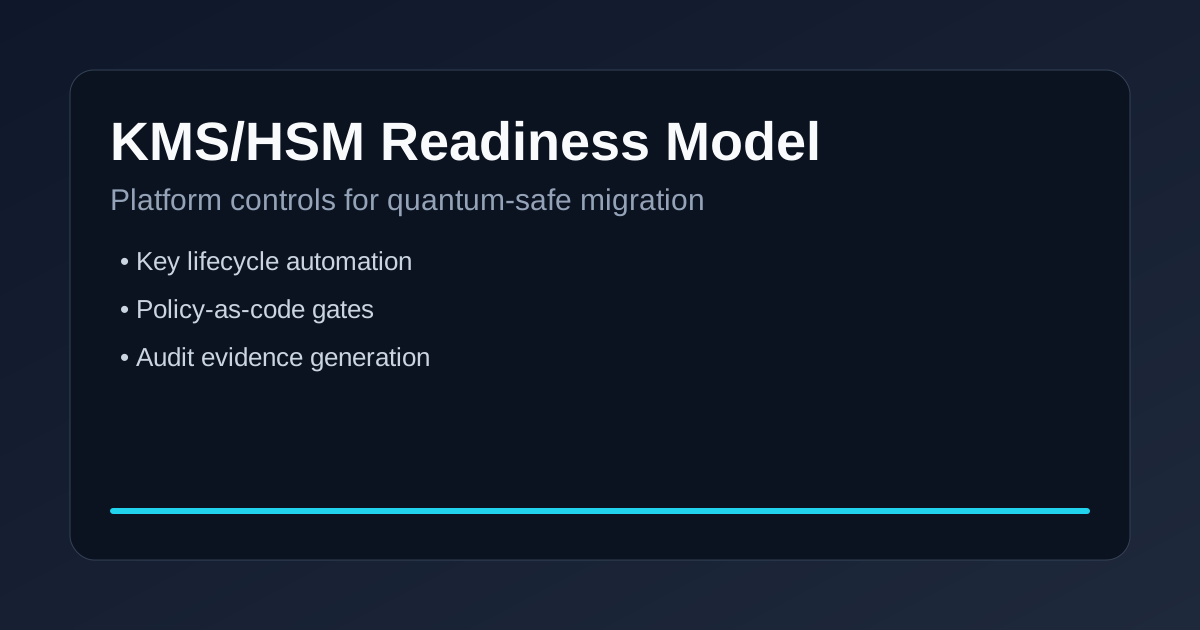
In Post-Quantum Cryptography programs, kms and hsm capability validation is not treated as an isolated technical task; it is an operational discipline that combines architecture decisions, release governance, and measurable reliability outcomes. Teams that scale successfully define explicit ownership boundaries, testable contracts, and rollback-first delivery plans before expanding adoption to critical workloads. Rather than relying on ad-hoc intuition, they instrument end-to-end visibility, compare behavior across environments, and use evidence from latency, failure, and policy metrics to guide rollout sequencing. This approach keeps delivery velocity high while preventing security and availability regressions that often appear when complex transitions are rushed.
In Post-Quantum Cryptography programs, kms and hsm capability validation is not treated as an isolated technical task; it is an operational discipline that combines architecture decisions, release governance, and measurable reliability outcomes. Teams that scale successfully define explicit ownership boundaries, testable contracts, and rollback-first delivery plans before expanding adoption to critical workloads. Rather than relying on ad-hoc intuition, they instrument end-to-end visibility, compare behavior across environments, and use evidence from latency, failure, and policy metrics to guide rollout sequencing. This approach keeps delivery velocity high while preventing security and availability regressions that often appear when complex transitions are rushed.
In Post-Quantum Cryptography programs, kms and hsm capability validation is not treated as an isolated technical task; it is an operational discipline that combines architecture decisions, release governance, and measurable reliability outcomes. Teams that scale successfully define explicit ownership boundaries, testable contracts, and rollback-first delivery plans before expanding adoption to critical workloads. Rather than relying on ad-hoc intuition, they instrument end-to-end visibility, compare behavior across environments, and use evidence from latency, failure, and policy metrics to guide rollout sequencing. This approach keeps delivery velocity high while preventing security and availability regressions that often appear when complex transitions are rushed.
8. Policy-as-Code Enforcement
In Post-Quantum Cryptography programs, policy-as-code enforcement is not treated as an isolated technical task; it is an operational discipline that combines architecture decisions, release governance, and measurable reliability outcomes. Teams that scale successfully define explicit ownership boundaries, testable contracts, and rollback-first delivery plans before expanding adoption to critical workloads. Rather than relying on ad-hoc intuition, they instrument end-to-end visibility, compare behavior across environments, and use evidence from latency, failure, and policy metrics to guide rollout sequencing. This approach keeps delivery velocity high while preventing security and availability regressions that often appear when complex transitions are rushed.
In Post-Quantum Cryptography programs, policy-as-code enforcement is not treated as an isolated technical task; it is an operational discipline that combines architecture decisions, release governance, and measurable reliability outcomes. Teams that scale successfully define explicit ownership boundaries, testable contracts, and rollback-first delivery plans before expanding adoption to critical workloads. Rather than relying on ad-hoc intuition, they instrument end-to-end visibility, compare behavior across environments, and use evidence from latency, failure, and policy metrics to guide rollout sequencing. This approach keeps delivery velocity high while preventing security and availability regressions that often appear when complex transitions are rushed.
In Post-Quantum Cryptography programs, policy-as-code enforcement is not treated as an isolated technical task; it is an operational discipline that combines architecture decisions, release governance, and measurable reliability outcomes. Teams that scale successfully define explicit ownership boundaries, testable contracts, and rollback-first delivery plans before expanding adoption to critical workloads. Rather than relying on ad-hoc intuition, they instrument end-to-end visibility, compare behavior across environments, and use evidence from latency, failure, and policy metrics to guide rollout sequencing. This approach keeps delivery velocity high while preventing security and availability regressions that often appear when complex transitions are rushed.
9. CI/CD Security Gates and Drift Detection
In Post-Quantum Cryptography programs, ci/cd security gates and drift detection is not treated as an isolated technical task; it is an operational discipline that combines architecture decisions, release governance, and measurable reliability outcomes. Teams that scale successfully define explicit ownership boundaries, testable contracts, and rollback-first delivery plans before expanding adoption to critical workloads. Rather than relying on ad-hoc intuition, they instrument end-to-end visibility, compare behavior across environments, and use evidence from latency, failure, and policy metrics to guide rollout sequencing. This approach keeps delivery velocity high while preventing security and availability regressions that often appear when complex transitions are rushed.
In Post-Quantum Cryptography programs, ci/cd security gates and drift detection is not treated as an isolated technical task; it is an operational discipline that combines architecture decisions, release governance, and measurable reliability outcomes. Teams that scale successfully define explicit ownership boundaries, testable contracts, and rollback-first delivery plans before expanding adoption to critical workloads. Rather than relying on ad-hoc intuition, they instrument end-to-end visibility, compare behavior across environments, and use evidence from latency, failure, and policy metrics to guide rollout sequencing. This approach keeps delivery velocity high while preventing security and availability regressions that often appear when complex transitions are rushed.
In Post-Quantum Cryptography programs, ci/cd security gates and drift detection is not treated as an isolated technical task; it is an operational discipline that combines architecture decisions, release governance, and measurable reliability outcomes. Teams that scale successfully define explicit ownership boundaries, testable contracts, and rollback-first delivery plans before expanding adoption to critical workloads. Rather than relying on ad-hoc intuition, they instrument end-to-end visibility, compare behavior across environments, and use evidence from latency, failure, and policy metrics to guide rollout sequencing. This approach keeps delivery velocity high while preventing security and availability regressions that often appear when complex transitions are rushed.
10. Service Mesh and Internal mTLS Migration
In Post-Quantum Cryptography programs, service mesh and internal mtls migration is not treated as an isolated technical task; it is an operational discipline that combines architecture decisions, release governance, and measurable reliability outcomes. Teams that scale successfully define explicit ownership boundaries, testable contracts, and rollback-first delivery plans before expanding adoption to critical workloads. Rather than relying on ad-hoc intuition, they instrument end-to-end visibility, compare behavior across environments, and use evidence from latency, failure, and policy metrics to guide rollout sequencing. This approach keeps delivery velocity high while preventing security and availability regressions that often appear when complex transitions are rushed.
In Post-Quantum Cryptography programs, service mesh and internal mtls migration is not treated as an isolated technical task; it is an operational discipline that combines architecture decisions, release governance, and measurable reliability outcomes. Teams that scale successfully define explicit ownership boundaries, testable contracts, and rollback-first delivery plans before expanding adoption to critical workloads. Rather than relying on ad-hoc intuition, they instrument end-to-end visibility, compare behavior across environments, and use evidence from latency, failure, and policy metrics to guide rollout sequencing. This approach keeps delivery velocity high while preventing security and availability regressions that often appear when complex transitions are rushed.
In Post-Quantum Cryptography programs, service mesh and internal mtls migration is not treated as an isolated technical task; it is an operational discipline that combines architecture decisions, release governance, and measurable reliability outcomes. Teams that scale successfully define explicit ownership boundaries, testable contracts, and rollback-first delivery plans before expanding adoption to critical workloads. Rather than relying on ad-hoc intuition, they instrument end-to-end visibility, compare behavior across environments, and use evidence from latency, failure, and policy metrics to guide rollout sequencing. This approach keeps delivery velocity high while preventing security and availability regressions that often appear when complex transitions are rushed.
11. External Vendor Coordination
In Post-Quantum Cryptography programs, external vendor coordination is not treated as an isolated technical task; it is an operational discipline that combines architecture decisions, release governance, and measurable reliability outcomes. Teams that scale successfully define explicit ownership boundaries, testable contracts, and rollback-first delivery plans before expanding adoption to critical workloads. Rather than relying on ad-hoc intuition, they instrument end-to-end visibility, compare behavior across environments, and use evidence from latency, failure, and policy metrics to guide rollout sequencing. This approach keeps delivery velocity high while preventing security and availability regressions that often appear when complex transitions are rushed.
In Post-Quantum Cryptography programs, external vendor coordination is not treated as an isolated technical task; it is an operational discipline that combines architecture decisions, release governance, and measurable reliability outcomes. Teams that scale successfully define explicit ownership boundaries, testable contracts, and rollback-first delivery plans before expanding adoption to critical workloads. Rather than relying on ad-hoc intuition, they instrument end-to-end visibility, compare behavior across environments, and use evidence from latency, failure, and policy metrics to guide rollout sequencing. This approach keeps delivery velocity high while preventing security and availability regressions that often appear when complex transitions are rushed.
In Post-Quantum Cryptography programs, external vendor coordination is not treated as an isolated technical task; it is an operational discipline that combines architecture decisions, release governance, and measurable reliability outcomes. Teams that scale successfully define explicit ownership boundaries, testable contracts, and rollback-first delivery plans before expanding adoption to critical workloads. Rather than relying on ad-hoc intuition, they instrument end-to-end visibility, compare behavior across environments, and use evidence from latency, failure, and policy metrics to guide rollout sequencing. This approach keeps delivery velocity high while preventing security and availability regressions that often appear when complex transitions are rushed.
12. Exception Governance and Risk Acceptance
In Post-Quantum Cryptography programs, exception governance and risk acceptance is not treated as an isolated technical task; it is an operational discipline that combines architecture decisions, release governance, and measurable reliability outcomes. Teams that scale successfully define explicit ownership boundaries, testable contracts, and rollback-first delivery plans before expanding adoption to critical workloads. Rather than relying on ad-hoc intuition, they instrument end-to-end visibility, compare behavior across environments, and use evidence from latency, failure, and policy metrics to guide rollout sequencing. This approach keeps delivery velocity high while preventing security and availability regressions that often appear when complex transitions are rushed.
In Post-Quantum Cryptography programs, exception governance and risk acceptance is not treated as an isolated technical task; it is an operational discipline that combines architecture decisions, release governance, and measurable reliability outcomes. Teams that scale successfully define explicit ownership boundaries, testable contracts, and rollback-first delivery plans before expanding adoption to critical workloads. Rather than relying on ad-hoc intuition, they instrument end-to-end visibility, compare behavior across environments, and use evidence from latency, failure, and policy metrics to guide rollout sequencing. This approach keeps delivery velocity high while preventing security and availability regressions that often appear when complex transitions are rushed.
In Post-Quantum Cryptography programs, exception governance and risk acceptance is not treated as an isolated technical task; it is an operational discipline that combines architecture decisions, release governance, and measurable reliability outcomes. Teams that scale successfully define explicit ownership boundaries, testable contracts, and rollback-first delivery plans before expanding adoption to critical workloads. Rather than relying on ad-hoc intuition, they instrument end-to-end visibility, compare behavior across environments, and use evidence from latency, failure, and policy metrics to guide rollout sequencing. This approach keeps delivery velocity high while preventing security and availability regressions that often appear when complex transitions are rushed.
13. SRE Rollback and Incident Playbooks
In Post-Quantum Cryptography programs, sre rollback and incident playbooks is not treated as an isolated technical task; it is an operational discipline that combines architecture decisions, release governance, and measurable reliability outcomes. Teams that scale successfully define explicit ownership boundaries, testable contracts, and rollback-first delivery plans before expanding adoption to critical workloads. Rather than relying on ad-hoc intuition, they instrument end-to-end visibility, compare behavior across environments, and use evidence from latency, failure, and policy metrics to guide rollout sequencing. This approach keeps delivery velocity high while preventing security and availability regressions that often appear when complex transitions are rushed.
In Post-Quantum Cryptography programs, sre rollback and incident playbooks is not treated as an isolated technical task; it is an operational discipline that combines architecture decisions, release governance, and measurable reliability outcomes. Teams that scale successfully define explicit ownership boundaries, testable contracts, and rollback-first delivery plans before expanding adoption to critical workloads. Rather than relying on ad-hoc intuition, they instrument end-to-end visibility, compare behavior across environments, and use evidence from latency, failure, and policy metrics to guide rollout sequencing. This approach keeps delivery velocity high while preventing security and availability regressions that often appear when complex transitions are rushed.
In Post-Quantum Cryptography programs, sre rollback and incident playbooks is not treated as an isolated technical task; it is an operational discipline that combines architecture decisions, release governance, and measurable reliability outcomes. Teams that scale successfully define explicit ownership boundaries, testable contracts, and rollback-first delivery plans before expanding adoption to critical workloads. Rather than relying on ad-hoc intuition, they instrument end-to-end visibility, compare behavior across environments, and use evidence from latency, failure, and policy metrics to guide rollout sequencing. This approach keeps delivery velocity high while preventing security and availability regressions that often appear when complex transitions are rushed.
14. Performance Budgeting and SLO Impact
In Post-Quantum Cryptography programs, performance budgeting and slo impact is not treated as an isolated technical task; it is an operational discipline that combines architecture decisions, release governance, and measurable reliability outcomes. Teams that scale successfully define explicit ownership boundaries, testable contracts, and rollback-first delivery plans before expanding adoption to critical workloads. Rather than relying on ad-hoc intuition, they instrument end-to-end visibility, compare behavior across environments, and use evidence from latency, failure, and policy metrics to guide rollout sequencing. This approach keeps delivery velocity high while preventing security and availability regressions that often appear when complex transitions are rushed.
In Post-Quantum Cryptography programs, performance budgeting and slo impact is not treated as an isolated technical task; it is an operational discipline that combines architecture decisions, release governance, and measurable reliability outcomes. Teams that scale successfully define explicit ownership boundaries, testable contracts, and rollback-first delivery plans before expanding adoption to critical workloads. Rather than relying on ad-hoc intuition, they instrument end-to-end visibility, compare behavior across environments, and use evidence from latency, failure, and policy metrics to guide rollout sequencing. This approach keeps delivery velocity high while preventing security and availability regressions that often appear when complex transitions are rushed.
In Post-Quantum Cryptography programs, performance budgeting and slo impact is not treated as an isolated technical task; it is an operational discipline that combines architecture decisions, release governance, and measurable reliability outcomes. Teams that scale successfully define explicit ownership boundaries, testable contracts, and rollback-first delivery plans before expanding adoption to critical workloads. Rather than relying on ad-hoc intuition, they instrument end-to-end visibility, compare behavior across environments, and use evidence from latency, failure, and policy metrics to guide rollout sequencing. This approach keeps delivery velocity high while preventing security and availability regressions that often appear when complex transitions are rushed.
15. Compliance Evidence and Audit Trails
In Post-Quantum Cryptography programs, compliance evidence and audit trails is not treated as an isolated technical task; it is an operational discipline that combines architecture decisions, release governance, and measurable reliability outcomes. Teams that scale successfully define explicit ownership boundaries, testable contracts, and rollback-first delivery plans before expanding adoption to critical workloads. Rather than relying on ad-hoc intuition, they instrument end-to-end visibility, compare behavior across environments, and use evidence from latency, failure, and policy metrics to guide rollout sequencing. This approach keeps delivery velocity high while preventing security and availability regressions that often appear when complex transitions are rushed.
In Post-Quantum Cryptography programs, compliance evidence and audit trails is not treated as an isolated technical task; it is an operational discipline that combines architecture decisions, release governance, and measurable reliability outcomes. Teams that scale successfully define explicit ownership boundaries, testable contracts, and rollback-first delivery plans before expanding adoption to critical workloads. Rather than relying on ad-hoc intuition, they instrument end-to-end visibility, compare behavior across environments, and use evidence from latency, failure, and policy metrics to guide rollout sequencing. This approach keeps delivery velocity high while preventing security and availability regressions that often appear when complex transitions are rushed.
In Post-Quantum Cryptography programs, compliance evidence and audit trails is not treated as an isolated technical task; it is an operational discipline that combines architecture decisions, release governance, and measurable reliability outcomes. Teams that scale successfully define explicit ownership boundaries, testable contracts, and rollback-first delivery plans before expanding adoption to critical workloads. Rather than relying on ad-hoc intuition, they instrument end-to-end visibility, compare behavior across environments, and use evidence from latency, failure, and policy metrics to guide rollout sequencing. This approach keeps delivery velocity high while preventing security and availability regressions that often appear when complex transitions are rushed.
16. Executive Reporting and Program Cadence
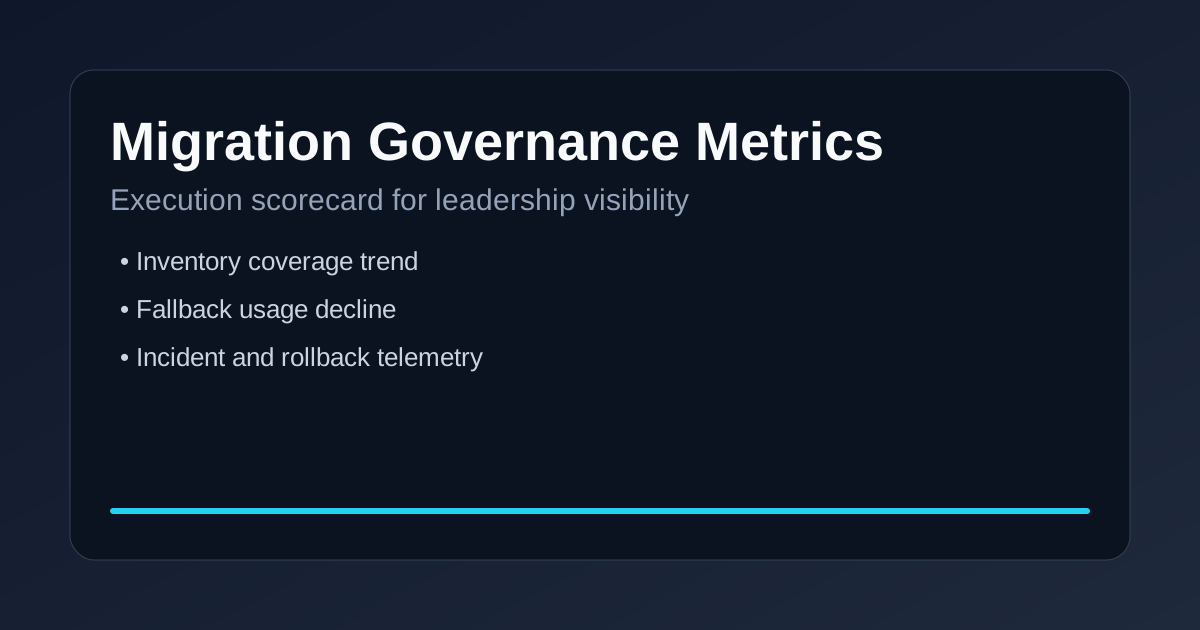
In Post-Quantum Cryptography programs, executive reporting and program cadence is not treated as an isolated technical task; it is an operational discipline that combines architecture decisions, release governance, and measurable reliability outcomes. Teams that scale successfully define explicit ownership boundaries, testable contracts, and rollback-first delivery plans before expanding adoption to critical workloads. Rather than relying on ad-hoc intuition, they instrument end-to-end visibility, compare behavior across environments, and use evidence from latency, failure, and policy metrics to guide rollout sequencing. This approach keeps delivery velocity high while preventing security and availability regressions that often appear when complex transitions are rushed.
In Post-Quantum Cryptography programs, executive reporting and program cadence is not treated as an isolated technical task; it is an operational discipline that combines architecture decisions, release governance, and measurable reliability outcomes. Teams that scale successfully define explicit ownership boundaries, testable contracts, and rollback-first delivery plans before expanding adoption to critical workloads. Rather than relying on ad-hoc intuition, they instrument end-to-end visibility, compare behavior across environments, and use evidence from latency, failure, and policy metrics to guide rollout sequencing. This approach keeps delivery velocity high while preventing security and availability regressions that often appear when complex transitions are rushed.
In Post-Quantum Cryptography programs, executive reporting and program cadence is not treated as an isolated technical task; it is an operational discipline that combines architecture decisions, release governance, and measurable reliability outcomes. Teams that scale successfully define explicit ownership boundaries, testable contracts, and rollback-first delivery plans before expanding adoption to critical workloads. Rather than relying on ad-hoc intuition, they instrument end-to-end visibility, compare behavior across environments, and use evidence from latency, failure, and policy metrics to guide rollout sequencing. This approach keeps delivery velocity high while preventing security and availability regressions that often appear when complex transitions are rushed.
17. Crypto-Agility Architecture Standards
In Post-Quantum Cryptography programs, crypto-agility architecture standards is not treated as an isolated technical task; it is an operational discipline that combines architecture decisions, release governance, and measurable reliability outcomes. Teams that scale successfully define explicit ownership boundaries, testable contracts, and rollback-first delivery plans before expanding adoption to critical workloads. Rather than relying on ad-hoc intuition, they instrument end-to-end visibility, compare behavior across environments, and use evidence from latency, failure, and policy metrics to guide rollout sequencing. This approach keeps delivery velocity high while preventing security and availability regressions that often appear when complex transitions are rushed.
In Post-Quantum Cryptography programs, crypto-agility architecture standards is not treated as an isolated technical task; it is an operational discipline that combines architecture decisions, release governance, and measurable reliability outcomes. Teams that scale successfully define explicit ownership boundaries, testable contracts, and rollback-first delivery plans before expanding adoption to critical workloads. Rather than relying on ad-hoc intuition, they instrument end-to-end visibility, compare behavior across environments, and use evidence from latency, failure, and policy metrics to guide rollout sequencing. This approach keeps delivery velocity high while preventing security and availability regressions that often appear when complex transitions are rushed.
In Post-Quantum Cryptography programs, crypto-agility architecture standards is not treated as an isolated technical task; it is an operational discipline that combines architecture decisions, release governance, and measurable reliability outcomes. Teams that scale successfully define explicit ownership boundaries, testable contracts, and rollback-first delivery plans before expanding adoption to critical workloads. Rather than relying on ad-hoc intuition, they instrument end-to-end visibility, compare behavior across environments, and use evidence from latency, failure, and policy metrics to guide rollout sequencing. This approach keeps delivery velocity high while preventing security and availability regressions that often appear when complex transitions are rushed.
18. Sustainable Multi-Year Migration Strategy
In Post-Quantum Cryptography programs, sustainable multi-year migration strategy is not treated as an isolated technical task; it is an operational discipline that combines architecture decisions, release governance, and measurable reliability outcomes. Teams that scale successfully define explicit ownership boundaries, testable contracts, and rollback-first delivery plans before expanding adoption to critical workloads. Rather than relying on ad-hoc intuition, they instrument end-to-end visibility, compare behavior across environments, and use evidence from latency, failure, and policy metrics to guide rollout sequencing. This approach keeps delivery velocity high while preventing security and availability regressions that often appear when complex transitions are rushed.
In Post-Quantum Cryptography programs, sustainable multi-year migration strategy is not treated as an isolated technical task; it is an operational discipline that combines architecture decisions, release governance, and measurable reliability outcomes. Teams that scale successfully define explicit ownership boundaries, testable contracts, and rollback-first delivery plans before expanding adoption to critical workloads. Rather than relying on ad-hoc intuition, they instrument end-to-end visibility, compare behavior across environments, and use evidence from latency, failure, and policy metrics to guide rollout sequencing. This approach keeps delivery velocity high while preventing security and availability regressions that often appear when complex transitions are rushed.
In Post-Quantum Cryptography programs, sustainable multi-year migration strategy is not treated as an isolated technical task; it is an operational discipline that combines architecture decisions, release governance, and measurable reliability outcomes. Teams that scale successfully define explicit ownership boundaries, testable contracts, and rollback-first delivery plans before expanding adoption to critical workloads. Rather than relying on ad-hoc intuition, they instrument end-to-end visibility, compare behavior across environments, and use evidence from latency, failure, and policy metrics to guide rollout sequencing. This approach keeps delivery velocity high while preventing security and availability regressions that often appear when complex transitions are rushed.